

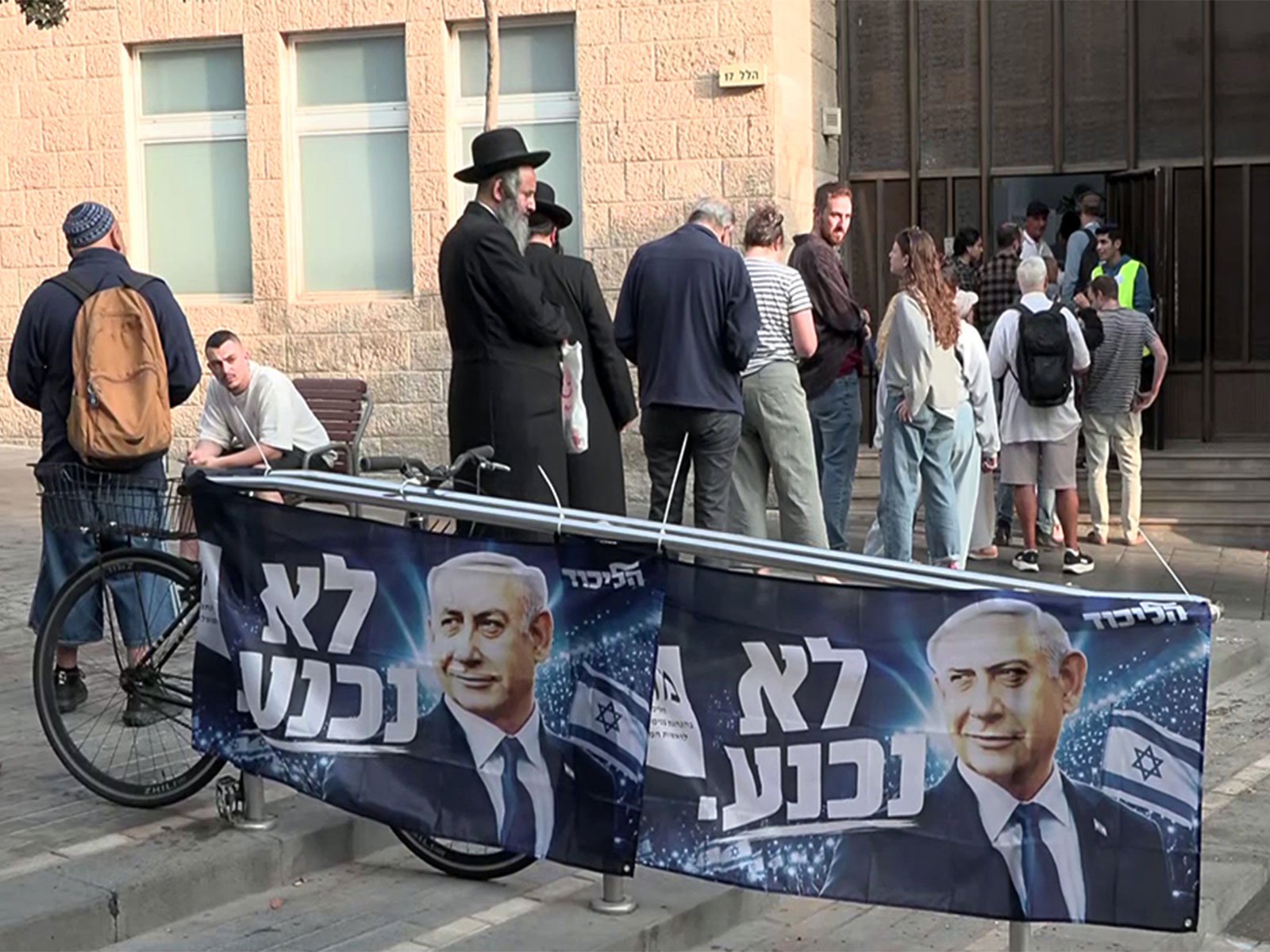
Jerusalem [Israel], October 31 (ANI): Parties in Israel’s current opposition bloc are considering legislation to introduce direct elections for prime minister in a bid to break the political deadlock and form a minority government without relying on the support of Arab parties, according to The Times of Israel.
The proposal would allow voters to elect the prime minister separately from the government, potentially providing a way out of the political impasse following Tuesday’s election, in which neither Prime Minister Benjamin Netanyahu’s bloc nor the opposition secured a majority in the 120-member Knesset.
Under the proposed system, a candidate winning a direct election for prime minister could theoretically form a minority government without securing a Knesset majority.
Netanyahu himself had pushed a similar proposal following the inconclusive March 2021 election, after his efforts to assemble a governing coalition had stalled.
However, Israel’s quasi-constitutional Basic Law: The Government requires a prospective government to secure a vote of confidence in the 120-member Knesset before being sworn in. Introducing direct elections would therefore require an amendment to the law, necessitating the support of at least 61 lawmakers, The Times of Israel reported.
Meanwhile, demonstrations are expected across Israel on Saturday evening in support of forming a Jewish-Arab government by the opposition’s so-called change bloc.
According to The Times of Israel, organisers from the Standing Together group have announced rallies at 7:30 pm at Tel Aviv’s Habima Square, Jerusalem’s Paris Square, as well as in Beersheba, Haifa and Tayibe.
The demonstrations are being organised to demand that opposition leaders recognise the bloc’s electoral victory and form a government based on Jewish-Arab partnership.
Tuesday’s election saw the opposition secure 67 seats against 53 for the coalition. However, the opposition’s tally comprises 48 seats won by Zionist parties and 19 seats secured by Arab non-Zionist parties, with whom Jewish opposition leaders had previously said they would not cooperate.
“Protesters are demanding that the bloc’s leaders recognise their victory and form a government based on Jewish-Arab partnership,” the organisers said.
“The Jewish-Arab majority that voted for change must also be reflected in the next government. Now is not the time to abandon our partnership, but to turn it into a political force that changes reality. Arab votes are worth exactly as much as Jewish votes, and Arab citizens must be full partners in shaping the country’s future,” they added.
The rallies come amid continuing efforts by opposition parties to find a viable governing arrangement following the inconclusive election, with the question of cooperation with Arab parties remaining a key challenge for the anti-Netanyahu bloc.
The final official results will be submitted to Israeli President Isaac Herzog on November 4, following examinations of possible errors or inquiries. The newly elected Knesset is scheduled to be sworn in on November 10. (ANI)
