

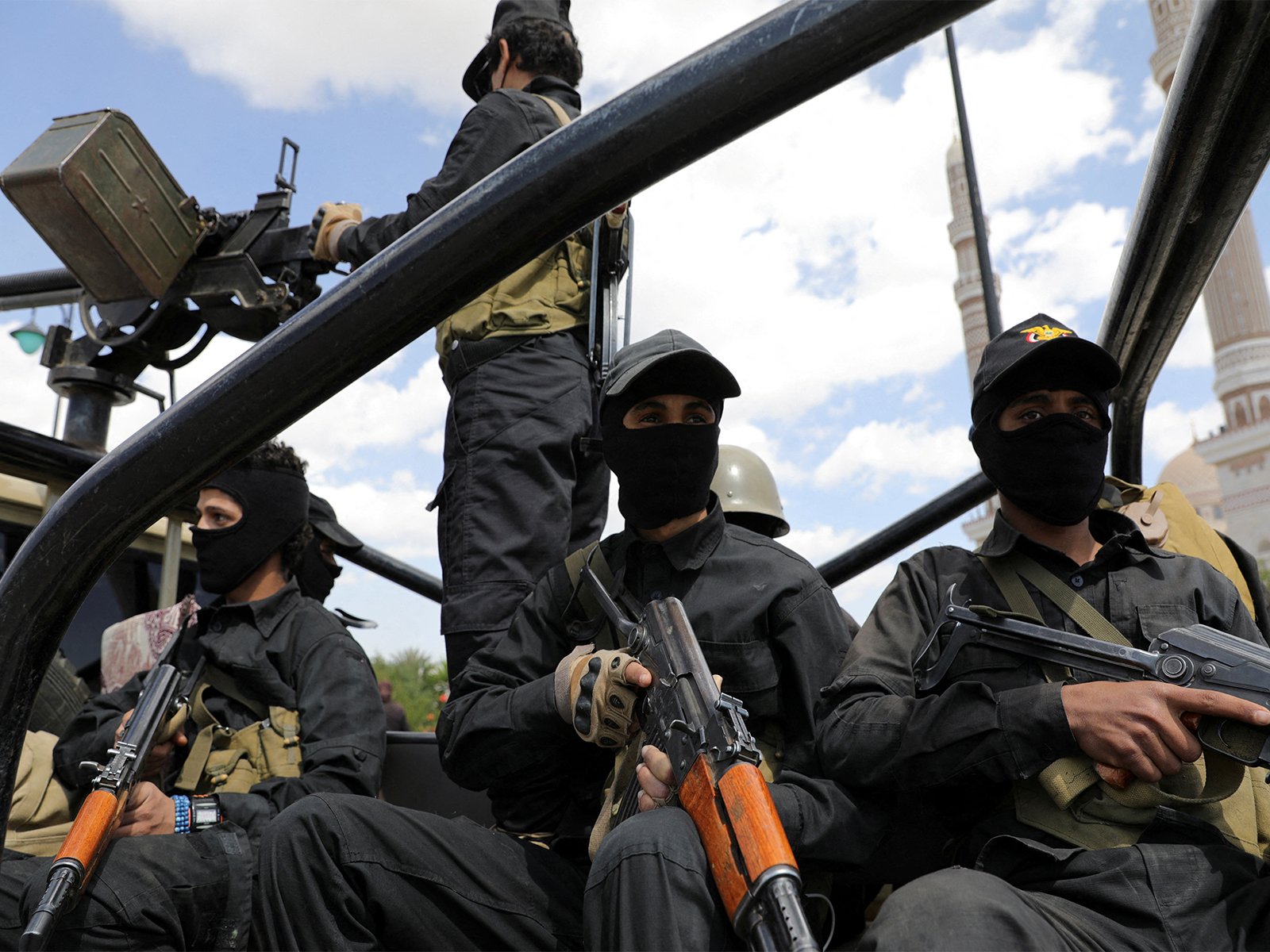
Sanaa [Yemen], October 31 (ANI): Yemen’s Iran-aligned Houthi group has strongly rejected accusations of deploying a drone towards the Medina region, following a declaration by the Saudi-led military coalition that an unmanned aircraft had been intercepted and destroyed above the area amid a widening regional conflict tied to the US-Israeli war.
The Houthis dismissed the coalition’s version of events, accusing Riyadh of fabricating claims of a hostile assault. This latest diplomatic and military friction unfolds against a backdrop of cross-border strikes hitting critical petroleum sites, military facilities and aviation hubs, exacerbating international anxiety over the spillover of hostilities.
Medina holds supreme spiritual importance as the sanctuary of the Prophet’s Mosque, standing as Islam’s second-most sacred city after Mecca and drawing millions of faithful annually, particularly during the annual Haj and Umrah pilgrimages.
Houthi military spokesperson Yahya Saree denied that insurgent forces had carried out any military operation directed at Saudi territory.
“The Yemeni Armed Forces affirm that they have not carried out any operation directed towards the Saudi interior. The claim by the criminal Saudi enemy that a drone was shot down in the airspace of Medina is merely a continuation of their grand and egregious fabrications,” Saree said in a social media post.
Prior to this statement, the Saudi-led military coalition announced that it had successfully intercepted and destroyed a drone launched by insurgent elements over the Medina governorate.
These developments echo previous accusations by Riyadh alleging that the Houthis had attempted to target Mecca and Medina. The movement has consistently dismissed such claims, asserting that its military operations focus exclusively on infrastructure and defence installations, while pledging to transparently claim responsibility for operations carried out.
In a previous escalation, national civil defence authorities reported that shrapnel from two intercepted ballistic missiles had fallen across the Mecca and Medina territories, with scattered debris noted near Mecca, as well as Jeddah, Taif and Rabigh.
The Houthis rejected responsibility for targeting the holy sites on that occasion as well.
The ongoing friction compounds a series of Houthi-claimed attacks targeting the Kingdom throughout the month, featuring strikes focused on major oil installations and airports.
On October 3, the movement claimed credit for a missile and drone attack directed at an Aramco facility in Riyadh. A subsequent strike on October 13 sparked a major fire at Saudi Aramco’s primary headquarters in Dhahran, followed by further claims targeting Aramco assets in Dhahran and a petroleum refinery in Riyadh on October 14.
Civil aviation infrastructure has faced recurrent assaults. A Houthi-claimed attack directed at King Khalid International Airport in Riyadh on October 10 resulted in 12 fatalities and 309 injuries, according to official Kingdom reports, while two preceding strikes earlier that week claimed four lives and damaged a commercial transport aircraft.
In a separate incident last week, an assault on King Fahd International Airport in Dammam caused two deaths, comprising a Saudi national and an Indian citizen, alongside eight injuries.
Furthermore, insurgent leadership has issued warnings cautioning commercial airlines against using Saudi airspace, while carving out specific exemptions for the skies above Mecca and Medina.
This latest confrontation has severely fractured the fragile stability secured through a UN-sponsored truce in 2022, which had previously halted cross-border attacks between the alliance and the movement.
While the coalition maintains support for Yemen’s internationally recognised administration, the Houthis retain firm control over the capital, Sanaa, and extensive territories across northern Yemen.
The renewed hostilities are unfolding in parallel with the ongoing US-Israeli war, as the Houthis escalate their operational tempo against Saudi assets.
Geographical positioning grants the group direct leverage over vital maritime chokepoints. Stationed adjacent to the Bab el-Mandeb Strait, a foundational maritime corridor linking the Red Sea to the Gulf of Aden, the group poses acute vulnerabilities for global commercial navigation and energy transit lines.
Riyadh has grown increasingly reliant on its domestic East-West pipeline network to route petroleum exports towards Red Sea terminals as regional disruptions restrict maritime navigation through the Strait of Hormuz.
Mecca and Medina remain Islam’s two most hallowed metropolitan centres, anchoring profound spiritual devotion across the global Muslim community.
Mecca encompasses the revered Kaaba, serving as the directional focal point for daily prayers and the emotional epicentre of the annual Haj pilgrimage, while Medina houses the Prophet’s Mosque, welcoming continuous streams of pilgrims year-round.
The recurring cycle of official accusations and outright denials concerning strikes directed at these sacred cities adds an exceptionally sensitive dimension to the unfolding confrontation between Riyadh and the Houthis. (ANI)
